









Council members
Mukesh Kapila CBE (Chair)
Dr Mukesh Kapila is the Special Representative for HIV and AIDS of the International Red Cross and Red Crescent Movement (IFRC). He was formerly a Director in the Department of Health Action in Crises of the World Health Organization. In 2003-2004 Dr Kapila was the United Nations Resident and Humanitarian Coordinator, and the UN Development Programme Resident Representative for the Sudan and, from 2002-2003, he was a Special Adviser to the United Nations, first to the Special Representative of the Secretary General in Afghanistan and then to the High Commissioner for Human Rights. Previously, he was Head of Conflict and Humanitarian Affairs of the UK Department for International Development from 1998 to 2002. As a mid-level civil servant in 1994, he was part of the first British teams to see the aftermath of the Rwandan Genocide after entering Rwandan Patriotic Front-controlled Kigali. Dr Kapila's background is in medicine, public health and, subsequently, international development. He is a trustee of the UN Institute for Training and Research and the International Peace Academy.
Arjan Buteijn (Treasurer)
Between 1989 and 1993 Arjan Buteijn studied business, Dutch and English at the Hogeschool Zeeland University of Applied Sciences. He has worked in auditing for Dubois & Co. registered accountants, Interne Accountantsdienst Hollandsche Beton Groep NV and Adviesburo Vermeulen BV, before returning to Dubois & Co., where he is now an associate employee. During this time he has worked on auditing procedures for companies in the developing world and the public sector. He is on the committee of Stichting Boost, developing a hostel for young homeless people in The Hague which will include the chance to work and learn under supervision. He also lectures part time at the Hogeschool Amsterdam University of Applied Sciences.
Ade Adeniji
Ade Adeniji LLB (Hons) MSc is the Human Resources Director at Liberty Global Europe, a digital media company in the Netherlands. Previously, he worked with Guardian Newspapers Limited (GNL) as Head of Human Resources. He joined GNL as Employment Law and Policy Advisor in 2001. He also worked in the UK Civil Service in departments that included the Cabinet Office, Foreign and Commonwealth Office and Treasury Solicitor's Department. Ade obtained his first degree from the University of East London and lives in Stratford.
Professor Yakin Ertürk
Professor Yakin Ertürk is a member of European Committee on the Prevention of Torture (CPR); from 2003 to 2009 she served as the UN Special Rapporteur on Violence against Women as well as a Member of the UNRISD Board. She is a Professor of the Department of Sociology at the Middle East Technical University, Ankara, since 1986. She holds a PhD in Development Sociology from Cornell University. Professor Ertürk has held a number of international and national posts among which are: Director of the United Nations Division for the Advancement of Women, Department of Economic and Social Affairs, 1999-2001; and Director of the United Nations International Research and Training Institute for the Advancement of Women (INSTRAW), 1997-1999.
Hurst Hannum
Since 1990 Hurst Hannum has served as Professor of International Law and Co-Director of the Center for Human Rights and Conflict Resolution at The Fletcher School of Law and Diplomacy. He has served as counsel in cases before the European and Inter-American Commissions on Human Rights and the United Nations; he also has been a member of the boards of several international human rights organizations. He has written about and/or participated in meetings concerned with minority rights generally, as well as particular situations in the Russian Federation (Tatarstan and Chechnya), Cyprus, Turkey, Northern Ireland, South Tyrol, India, Sri Lanka, East Timor, Sudan, Georgia (South Ossetia and Abkhazia), Greenland, the Balkans, Tibet, and U.S. dependent territories as well as serving as consultant to the UN negotiations on East Timor. Professor Hannum is author or editor of a number of publications on human rights law and practice, including Guide to International Human Rights Practice (Transnational Publishers, 3d ed. 1999) Autonomy, Sovereignty, and Self-Determination: The Accommodation of Conflicting Rights (Univ. of Pennsylvania, rev. ed. 1996). He completed both an A.B. with High Honours and J.D. at the University of California, Berkeley.
Mehr Khan Williams
Formerly Assistant Secretary-General and UN Deputy High Commissioner for Human Rights 2004-2006, Mehr Khan Williams has worked for the United Nations since 1976. She has held senior management positions in New York, Florence and Bangkok with the United Nations Children's Fund (UNICEF), including as Regional Director for East Asia and the Pacific, Director of the Division of Communication and Director of the Innocenti Research Center. She has also served as Acting Director of the UN Information Centre in Sydney. Ms. Khan Williams has written extensively on development and human rights issues for the international media and has served as a trustee for a number of international organizations including UNICEF UK and Minority Rights Group International. Prior to joining the UN, Ms. Khan Williams worked for the World Bank in Washington, D.C., the Associated Press of Pakistan, United Press International and the University of Karachi. Ms. Khan Williams was born in India in 1945 and is a national of both Pakistan and Australia.
Lekha Klouda
Lekha Klouda has spent most of her working life in the UK charitable sector. From 1999 until her retirement in 2010, she was the founder Director of the Association of Charity Shops (now the Charity Retail Association), the UK voluntary organisation representing over 300 charities operating retail outlets. She oversaw the growth of the Association at a key time for the charity retail sector, leaving it as a well-established, financially independent and well-respected organisation promoting and supporting the charity retail sector. Formerly she worked at the Charities Advisory Trust for ten years, a charity based in London, where she had overall central administrative, financial and management responsibilities reporting directly to, and deputising for the Director. Prior to this she spent 10 years in Africa where her husband worked for Oxfam in Tanzania and Malawi. She has also taught English to refugees and asylum seekers in the UK. In addition to her paid work in the voluntary sector, Lekha has been an active volunteer. She continues her involvement with the charitable sector through her work as governor of a local voluntary aided secondary school and as a charity trustee for a number of charities including TRAID, the textile recycling and international development charity and Minority Rights Group International where she is Vice-Chair of the International Council and chairs its Finance Committee.
Lydia Nyati-Ramahobo
Lydia Nyati-Ramahobo is an Associate Professor of Education and Deputy Vice Chancellor for Student Affairs at the University of Botswana. She attained her PhD in Applied Linguistics at the University of Pennsylvania in 1991, where she was awarded the William Arnold Award for outstanding performance and leadership qualities. She is co-founder of the Kamanakao Association, a pressure group for the linguistic and cultural rights of the Wayeyi tribe. She is also founder and Secretary General of RETENG: The Multi-cultural Coalition of Botswana, which is an umbrella body for thirteen associations advocating for constitutional amendments to bring about equality among all ethnic groups in Botswana. Her major publications include ‘Language policy, cultural rights and the law in Botswana' (Mouton de Gruyter).
William Samuel
William Samuel has worked as a chartered accountant with PriceWaterhouseCoopers, and served as head of the British diplomatic mission to the Turks and Caicos Islands. He also worked as Vice-Chair of the British independent booksellers, Foyle's, opened in 1903 by his grandfather and great-uncle.
Stella Tamang
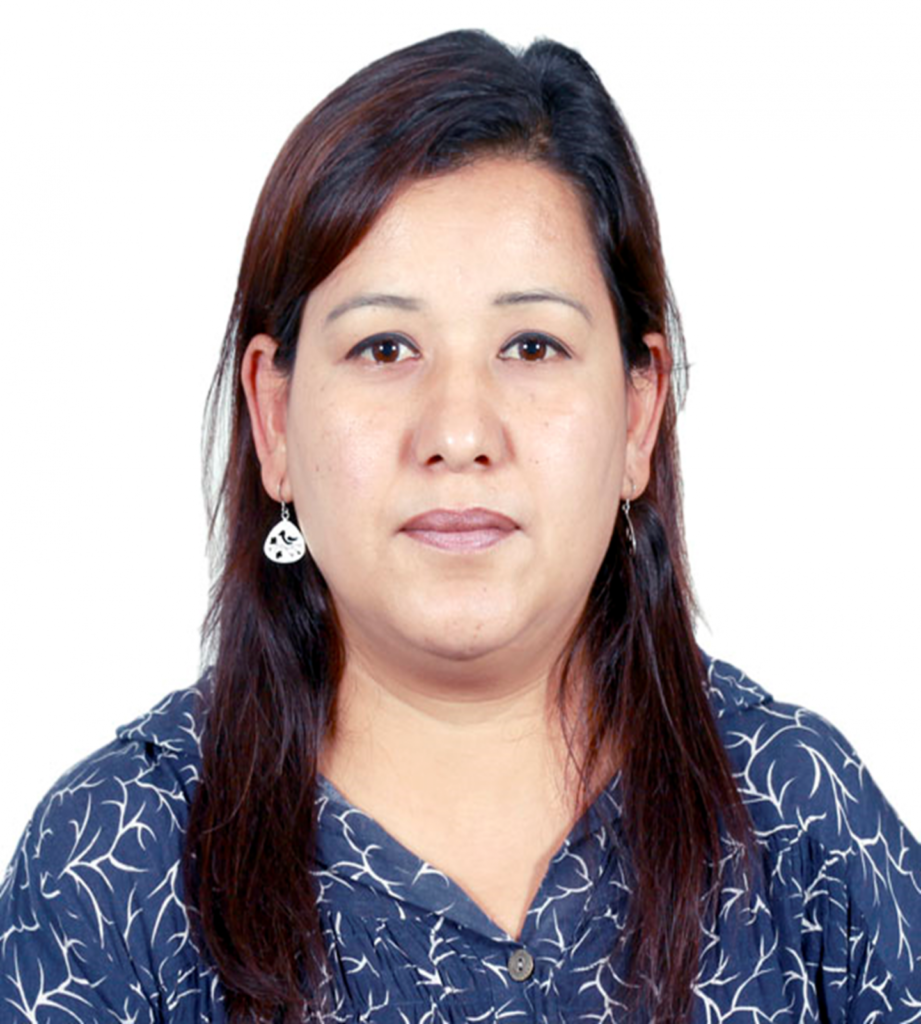
Stella Tamang is revolutionizing education for rural Nepalese women. Her work improves antiquated curricula by adding hands-on skills training programs and income generation activities that give parents an incentive to keep their girls in school. This gives girls a practical alternative to urban sweatshops. Stella grew up in the outskirts of Kathmandu and herself grew up earning and learning simultaneously. She later realized that she would have to balance learning with gaining marketable skills for the labor force. She started a very small day-care program with about five children. Since there was still no school in the area, they soon started a small informal school. In the second year of the program they had 50 children enrolled for 20 rupees a month. This was the start of what is today the Bhrikuti Secondary School, an alternative, but formally recognized day school for 800 students. In order to meet the needs of the many child laborers that were streaming into Kathmandu from their rural villages, Stella designed a skill building program for girls. In 1993, this developed into the Bikalpa Gyan Kendra (Alternative Learning Center) giving classes for children working in Katmandu factories. This later became the 18 month boarding school program which she runs today.
Dr Melakou Tegegn
Dr Tegegn completed an MA in Development Studies: Politics of Alternative Development Strategies at the Institute of Social Studies, The Hague and a PhD in Sociology, concentrating on development, freedom and democracy in Ethiopia, at the University of South Africa, Pretoria. He has worked as a Development Consultant and coordinator for many country and regional development programmes with regional NGOs. His areas of expertise include civil society, gender, indigenous and pastoral peoples' issues and development media. From 2001-2005 he lectured part time at the University of Addis Ababa and at the Institute of Gender Studies, on issues including civil society, globalization, gender and development and advocacy. His many publications include Power Politics: Kinijit in the 2005 Elections; in Zegeye, A., Togia, P., and Tegegn, M., Ethiopia: Ethiopian Millennium Special Publication (SAGE, New Delhi, forthcoming), and The Ethiopia-Eritrea Conflict: A Critical Observation, with Abebe Zegeye, (Institute of Global Dialogue, Occasional Paper No. 54, Johannesburg, 2007).